
“Our Job Is Not Finished”
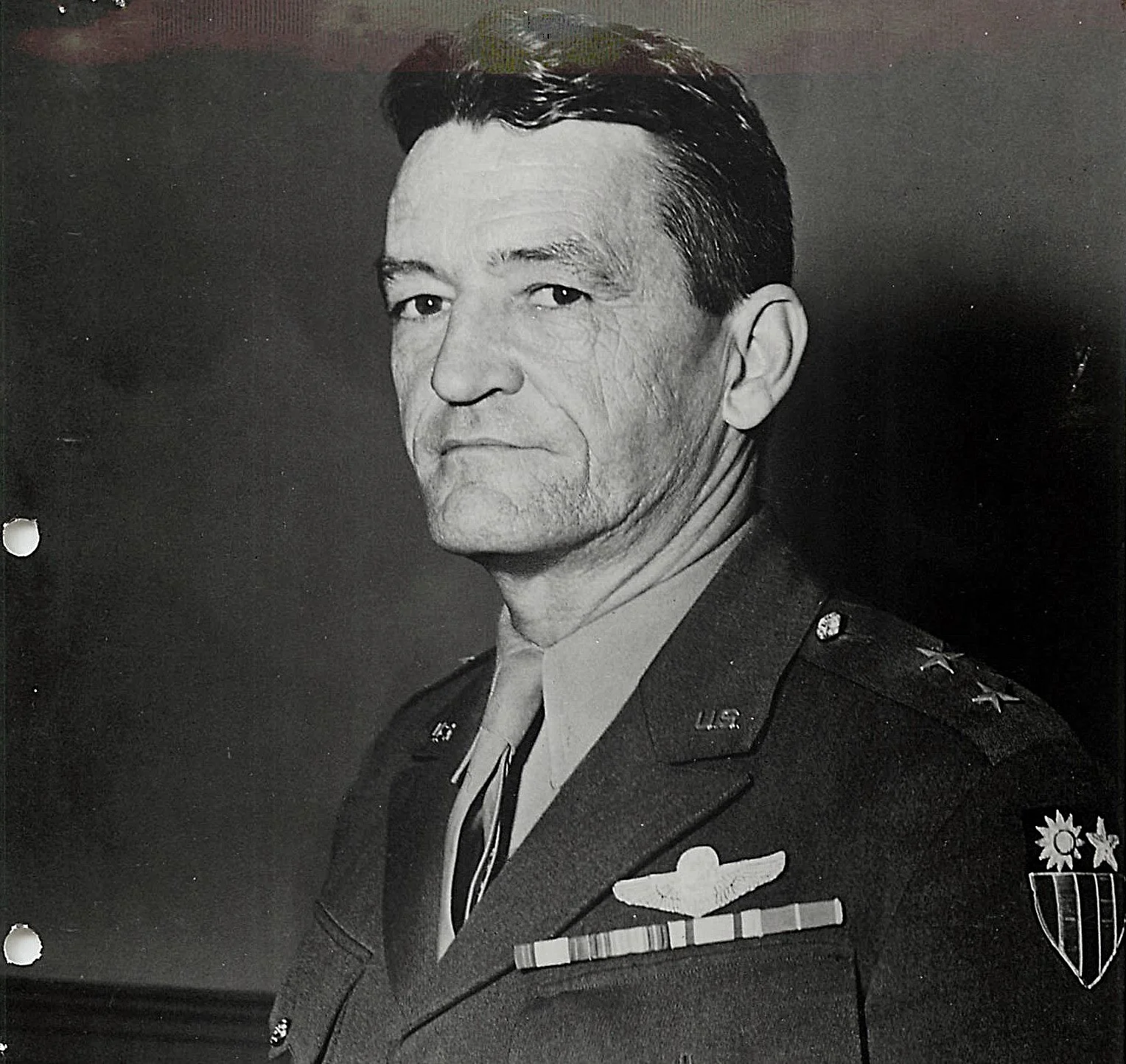
On Independence Day of 1945, men stationed at 14th Air Force bases in China received a message of confidence and encouragement from their commanding officer as the war neared its successful conclusion. Maj. Gen. Claire L. Chennault, famed as a brilliant military strategist and leader in both the US and China, expressed his satisfaction with their many successes, but he reminded them, “Our job is not finished.” Unknown to any of them, Chennault’s time as their beloved commander would come to an end before his hope “to celebrate final victory” with them was fulfilled, forced out because of his controversial methods and outspoken criticisms of his superiors. US Air Force
Men stationed at 14th Air Force bases scattered across Free China received this message of encouragement from their commander, Maj. Gen. Claire L. Chennault, on Independence Day as the war neared its end:
Today, July 4, 1945, we celebrate three important occasions—the 169th anniversary of the Declaration of Independence, the third anniversary of the establishment of the American Army Air Forces in China, and the third anniversary of the activation of the Twenty-third Fighter Group. These three anniversaries mark days of adversity for people struggling for independence and to throw off the yoke of oppression. They also make days of hope and determination for victory
On July 4, 1942, the Japanese air force was still very strong in China, although the gallant pilots of the American Volunteer Group had destroyed many of their planes and had forced them to respect the ability of American airmen. Since July 4, 1942, the China Air Task Force and later the Fourteenth Air Force, with the 23rd Fighter Group spearheading the attack, have shown the world and particularly the Japanese what a small, well-trained, and determined air force can accomplish with the help of our Chinese Allies. We have demonstrated that a few Americans with their native initiative, ingenuity, courage, and leadership, and with a minimum of combat airplanes, could defeat the Japanese air force in China with its initial huge numerical superiority, unlimited facilities, and supplies.
Our job is not finished, however, and will not be finished until all Japanese dreams of conquest have been shattered. At every opportunity we must strike the enemy with every weapon at hand until, with our Allies, the final complete defeat of Japan is accomplished.
On this historic day, remembering the ideals of our forefathers who fought in the War of Independence, I charge you, the officers and enlisted men of the Fourteenth Air Force, to rededicate yourselves to the principles of freedom and the determination that will end this war in early victory. I join you in the hope that we may be able to celebrate final victory and the next Fourth of July at home.
The approximately six-week period that remained before Chennault’s hope for Japan’s surrender was fulfilled were eventful indeed. He lost control of his famous “Fighting Fourteenth” only days later, when Maj. Gen. Albert C. Wedemeyer, commander of US Forces, China Theater, received orders from Washington for the reorganization of the air forces for the primary purpose of liberating a port on the China coast. The plan called for moving the 10th Air Force, under the command of Maj. Gen. George E. Stratemeyer, from now-liberated Burma to China to replace the existing 14th Air Force, commanded by Maj. Gen. Chennault.
According to the plan that was eventually approved, Stratemeyer would command the “China Theater Air Forces,” and under him Chennault would command the “Strategical Air Force” and Maj. Gen. Howard C. Davidson (formerly in command of the 10th Air Force) the “Tactical Air Force.”
The 10th Air Force would be based south and west of Chihkiang for direct support of Chinese ground forces, while the 14th Air Force and its unconventional and outspoken leader would be banished to areas north of the Yangtze River, where significant targets and needed supplies were sparse. The 10th Air Force would extract from the 14th the crack veteran 23rd and 51st Fighter Groups, along with the two best B-25 squadrons, and then make “a dash to final victory” with the Chinese armies. The 14th would be left “to die on the vine” after it had been whittled down to the size of a normal wing.
Chennault had little intention of being put out to pasture and entered a vigorous protest against the entire plan. On July 6, Stratemeyer officially assumed command as commanding general, AAF China Theater. Chennault’s request for retirement, handed in on the same date, was promptly approved.
By the time the Air Forces in China were undergoing reorganization, victory had been achieved against the Axis powers in Europe, and the Allies had made a number of major advancements against the Japanese in the Pacific, capturing many of their island strongholds that were being used to take the war to the emperor’s doorstep.
Other decisive events followed in rapid succession. The US atomic bombings of Hiroshima on August 6 and Nagasaki on August 9 struck a major blow against the enemy’s confidence and refusal to surrender. Following a declaration of war against Japan on August 8, the Soviet Union’s Red Army launched an invasion of Japanese-held Manchuria on the 9th. With 1.5 million troops, the Soviets rapidly overwhelmed the depleted Japanese Kwantung Army, dismantling a brutal 14-year occupation. The US devastation of cities on Japan’s home islands, paired with the Soviet invasion, finally shattered the Japanese military command's resolve in continuing the war.
Maj. Gen. Charles B. Stone III assumed command of the 14th Air Force on August 10, now with Chennault out of the equation. The 10th Air Force, under the command of Maj. Gen. Albert F. Hegenberger, was in the process of moving from India to Kunming, but the deployment of these units to China was not completed by the end of hostilities.
As these high-level changes were being implemented, life for the rank and file proceeded as usual, incessantly pounding enemy targets as ordered. They learned that a cease-fire had been called on August 11. Although Emperor Hirohito did not announce his intention to surrender until four days later, for them, the war was over.
You can discover more about this little-known part of America’s history. Find it now in The Spray and Pray Squadron: 3rd Bomb Squadron, 1st Bomb Group, Chinese-American Composite Wing in World War II!