
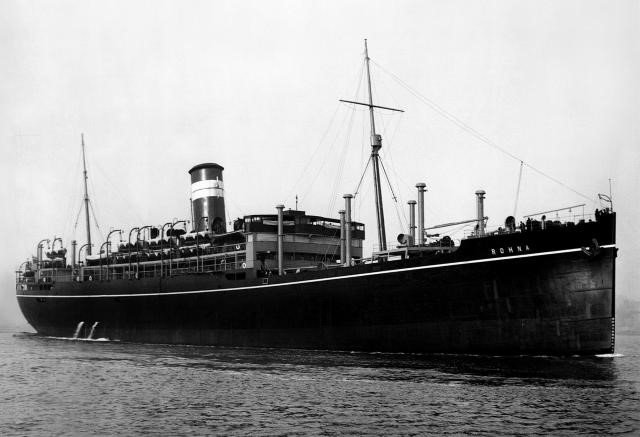
The ROHNA Disaster
The sinking of the British troopship HMT Rohna by a German guided missile in the Mediterranean on November 26, 1943, led to the greatest loss of US lives in a single incident at sea in our nation’s history. The Rohna was overloaded with 2,193 American military personnel, on their way to the China-Burma-India theater to aid in defense against invasion by Imperial Japanese troops, when she came under aerial attack. The ship was hit by an early "smart bomb"—a Henschel Hs-293 radio-controlled, rocket-boosted glide bomb, launched from a Luftwaffe bomber—that caused catastrophic damage. The ship sank in 90 minutes. Lost were 1,015 GIs, in addition to 123 of the ship’s crew. Yet the sinking of the Rohna is generally overlooked by naval historians, and most people have never even heard of the tragedy.
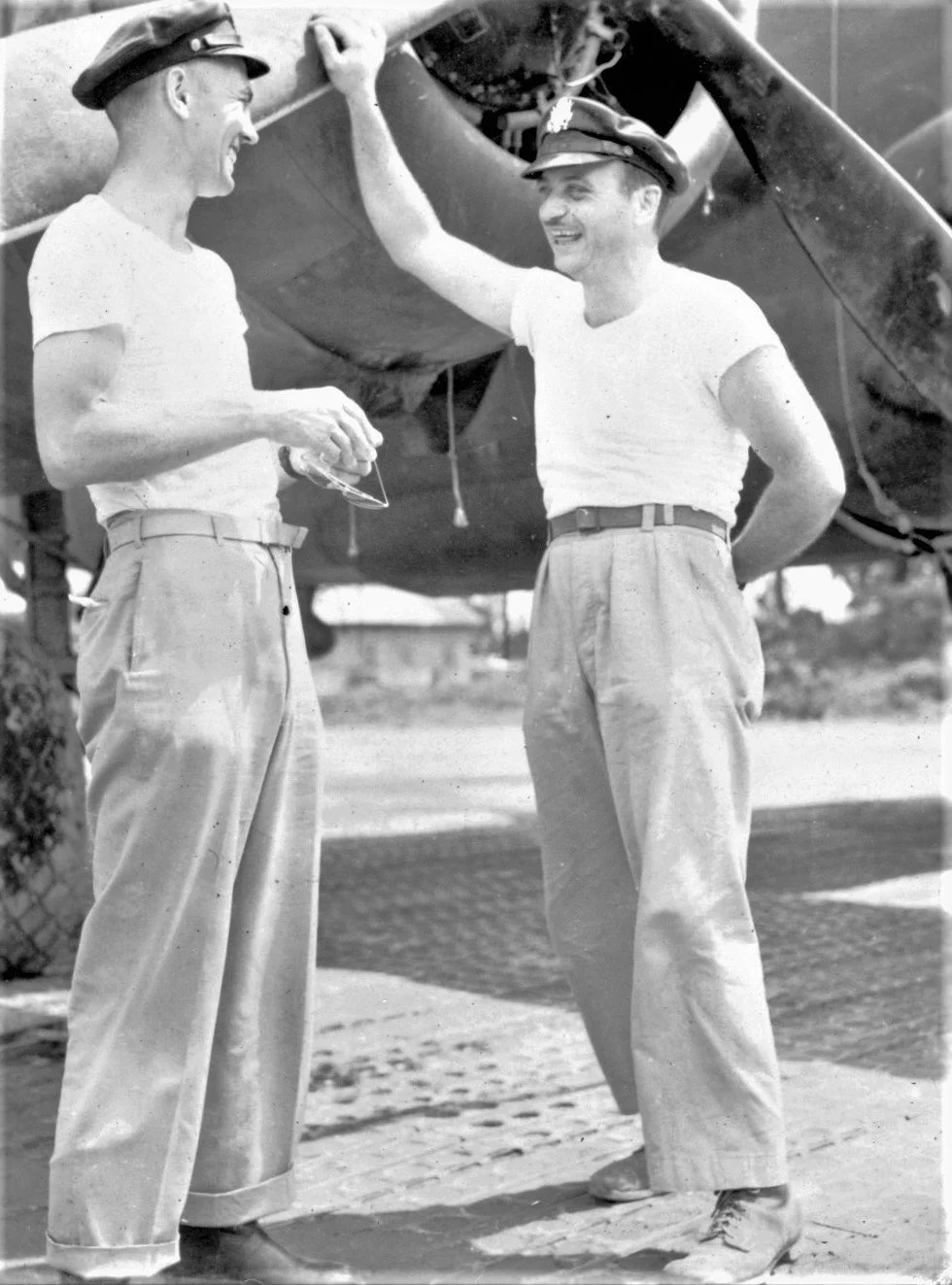
Chester M. (“Coondog”) Conrad
Maj. Chester M. Conrad served from March 1944 to February 1945 as commanding officer of the 3rd Bomb Squadron, 1st Bomb Group, Chinese-American Composite Wing. Known as "Chet" back home, he had picked up the sobriquet "Coondog" somewhere along the way (his radio call sign, according to my father). While previously serving in the 2nd Bomb Squadron, his aircrew was credited with shooting down a Japanese bomber. Conrad, with his 3rd Squadron, later provided air support to Chinese and American ground forces that retook Myitkyina, a Japanese stronghold used to attack Allied planes crossing the Himalayan “Hump.” He participated in many other successful missions, including a raid against storage facilities on the Hankow docks in January 1945. After his return to the US the following month, he continued to work with Chinese airmen. His military career was cut short in 1955, when then-Lt. Col. Conrad died as a result heart disease.