
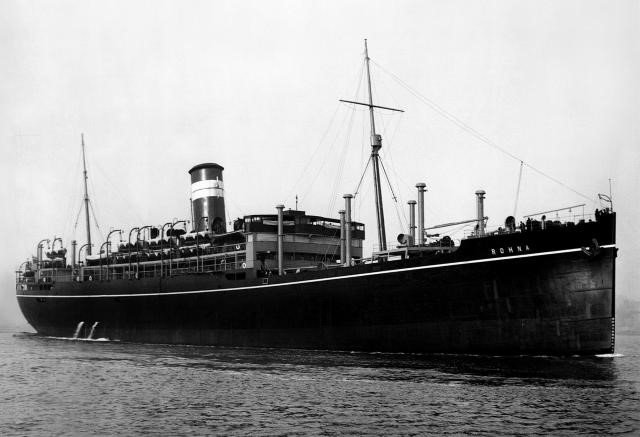
The ROHNA Disaster
The sinking of the British troopship HMT Rohna by a German guided missile in the Mediterranean on November 26, 1943, led to the greatest loss of US lives in a single incident at sea in our nation’s history. The Rohna was overloaded with 2,193 American military personnel, on their way to the China-Burma-India theater to aid in defense against invasion by Imperial Japanese troops, when she came under aerial attack. The ship was hit by an early "smart bomb"—a Henschel Hs-293 radio-controlled, rocket-boosted glide bomb, launched from a Luftwaffe bomber—that caused catastrophic damage. The ship sank in 90 minutes. Lost were 1,015 GIs, in addition to 123 of the ship’s crew. Yet the sinking of the Rohna is generally overlooked by naval historians, and most people have never even heard of the tragedy.

Mark T. Seacrest: “Resourceful Combat Pilot”
Mid-August of 1944 found Captain Mark T. Seacrest and his binational aircrew making their way through unfamiliar territory, traveling on foot and by horseback with the aid of Chinese civilians. Seacrest had led a two-plane formation on this mission to skip-bomb a twin highway bridge near Lashio, terminus of the Burma Road's south end, but damage from concealed antiaircraft weapons forced them both down. Seacrest returned with minor injuries. One of the Chinese-American Composite Wing’s most capable and congenial pilots, he eventually completed sixty-four combat missions and had 305 combat hours to his credit, and the amount of tonnage he sank while operating in the China Sea totaled among the highest of any B-25 pilot in any theater.